Denver,
Colorado
Updated September 2008
In
March 1988, the Lower Downtown (LoDo) District was formed by
an act of the Denver City Council with the intention of "encouraging
the preservation of an area that is significant because of its
architectural, historical, and economic value."
20 years later, restoration work has just completed on one of
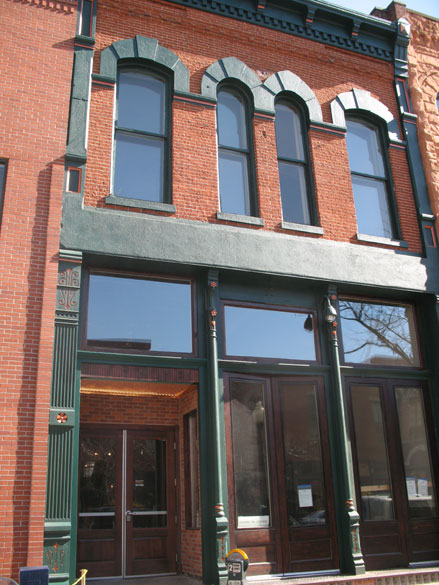
the last unrestored historic structures in Lodo. 1526 Blake
Street, built in 1863 and renovated in the 1880s, is one the
few Lodo buildings to remain essentially unchanged since the
latter 19th century.
 The
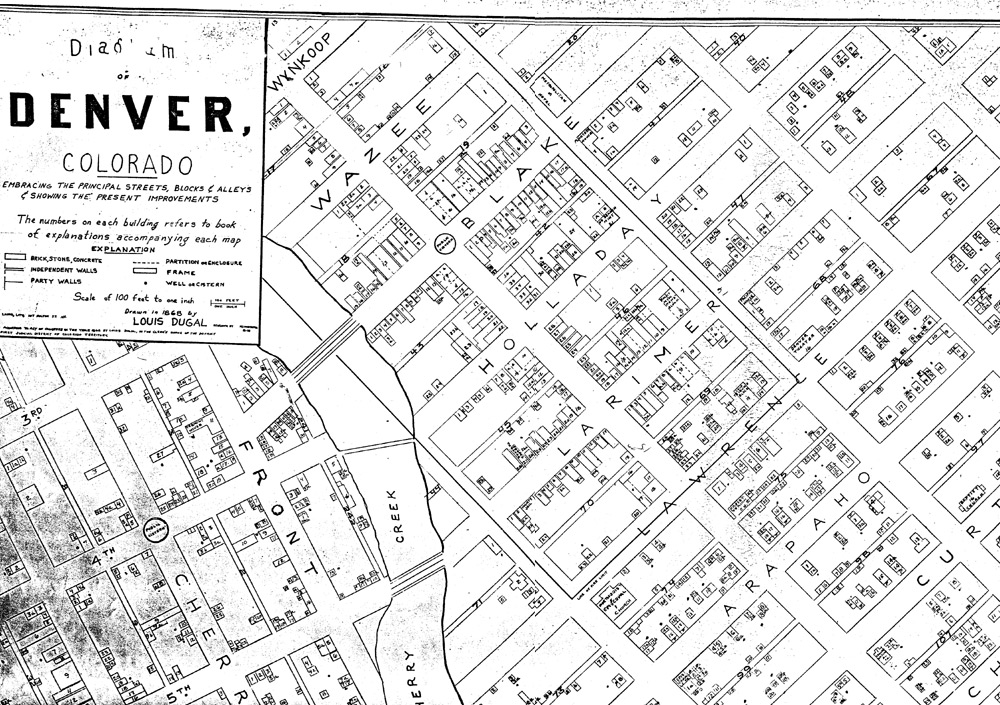
original two-story brick building at 1526 Blake Street was built
in 1863, and according to the 1868 Dougal Map of Denver, housed
a boarding house and saloon owned by Charles Eyser.
The
original two-story brick building at 1526 Blake Street was built
in 1863, and according to the 1868 Dougal Map of Denver, housed
a boarding house and saloon owned by Charles Eyser.
Many
of the brick buildings in Lodo were constructed after an April
19, 1863 fire which devastated Denver and led to the "Brick
Ordinance." The ordinance requiring all new buildings be
constructed of brick or stone was drafted into law on April
20, 1863 and was in place until the 1940s.
At
the time of the fire, Denver was 5 years old, after being founded
by prospectors on the banks of Cherry Creek in 1858.
Some
of the oldest buildings that still exist in LoDo, Denver were
built immediately following the 1863 fire. These are the long,
narrow brick structures built along lower Blake, Market and
Wazee Streets.
Lower
Blake Street, being the central business district, saw rapid
re-development after the fire. Among the first that were rebuilt
was 1514 Blake Street which started as the People's Restaurant
in August 1863, just 4 months after the devastating fire. The
building was owned at one time by Barney Ford, who was born
a slave in 1822 Virginia, and later rose to prominence as the
first African American to serve on a U.S. grand jury and was
nominated for the Territorial Legislature.
Also
of interest is 1516 Blake, which began as the Empire Bakery,
and is shown in many of the earliest photographs of Blake Street.
This brick structure is one of the very few buildings in Lodo
that remains essentially unchanged since 1863.
1526
Blake Street began in 1863 as a boarding house and saloon and
after an 1880's renovation, housed various wholesale liquor,
tobacco and cigar businesses. Of historical significance is
one of the oldest and well-hidden vaults in Lower Downtown.
The walk-in steel vault, manufactured by the Union Foundry Works
of Chicago in the 1880s, is accessed by a hidden entry in the
ground floor. Also of note is the original freight elevator,
manufactured in 1890, and in use up till 1974 when operation
was ceased by the City of Denver for safety reasons.
In
September 2008, the restoration projected completed and the
historic building now houses a restaurant & bar: The
Blake Street Vault - a national environmental firm: Horizon
Wind Energy, and the downtown Denver Loft brokerage: HomeToDenver
LLC.
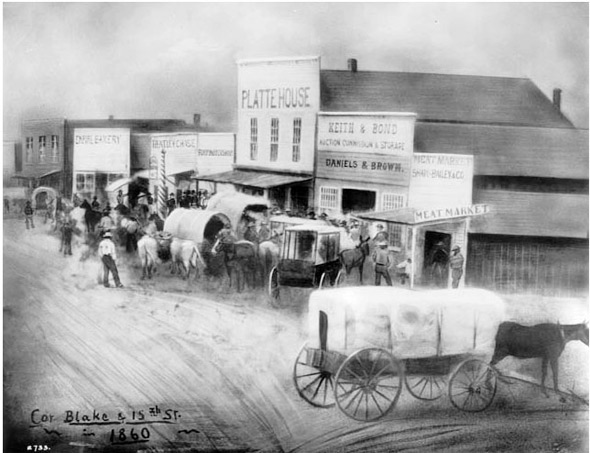
Blake
Street - 1860 (At 15th (F) Street looking toward 16th (G) Street)
Denver Public Library - Western History
Illustration of Blake Street - created in 1860 - two years after
Denver was founded.
The 1863 fire would destroy most of the wooden buildings along
Blake Street.
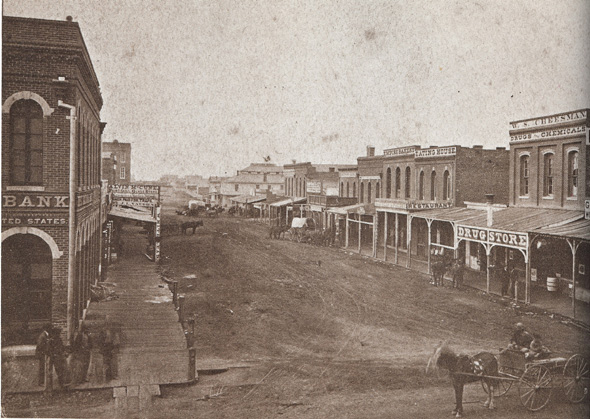
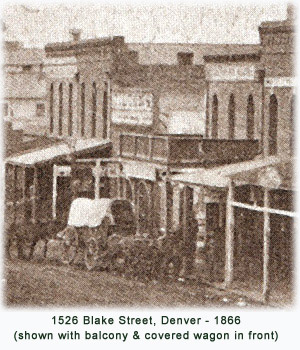
Blake Street - 1866 (looking toward 16th (G) Street)
Denver Public Library - Western History
On right - W.S. Cheesman Drugstore, People's Restaurant, Empire
Bakery, groceries, and
Charles Eyser Boarding House & Saloon (1526 Blake Street)
-
shown with the 2nd floor balcony and covered wagon in front.
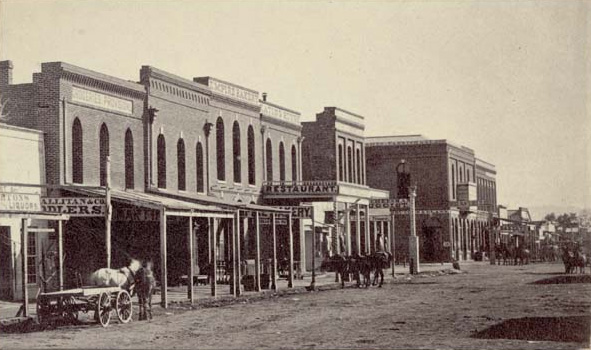
Blake
Street - 1865 (looking toward 15th (F) Street)
Denver Public Library - Western History
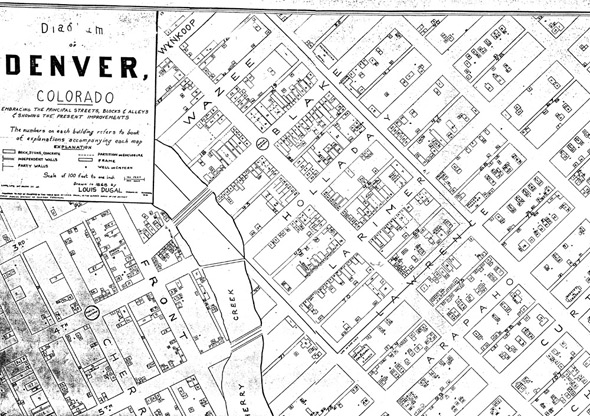
Denver
- 1868 Dougal Map - oldest annotated map of Denver
Denver Public Library - Western History
click for larger
map - see Block 42 annotations